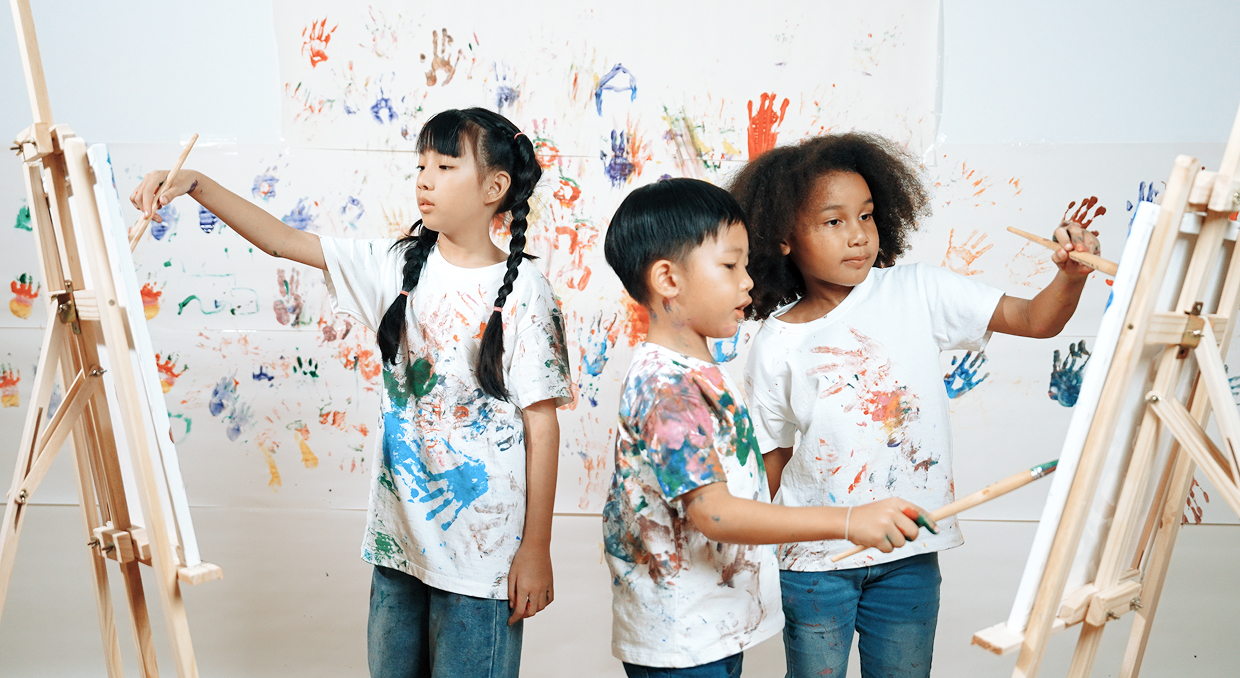

Art education plays a crucial role in the comprehensive development of students at every level of their schooling. At BrightHills Elementary, we believe that integrating art into our curriculum not only enhances creativity but also significantly contributes to the overall academic and social development of our students.
Artistic activities encourage creativity, which is not only essential for artistic expression but also fosters innovation in solving mathematical problems, scientific inquiries, and even in daily student interactions. Creativity nurtured through art can lead to novel ways of understanding, adapting, and relating to a rapidly changing world.
Studies have consistently shown that students who are involved in the arts are often better performers in their academic studies. This correlation is seen in improved scores in math, reading, and languages—skills that are enhanced by the critical thinking and attention to detail developed through art classes. At BrightHills, our students engage in a variety of artistic disciplines, which helps sharpen their focus and perseverance in other subjects.
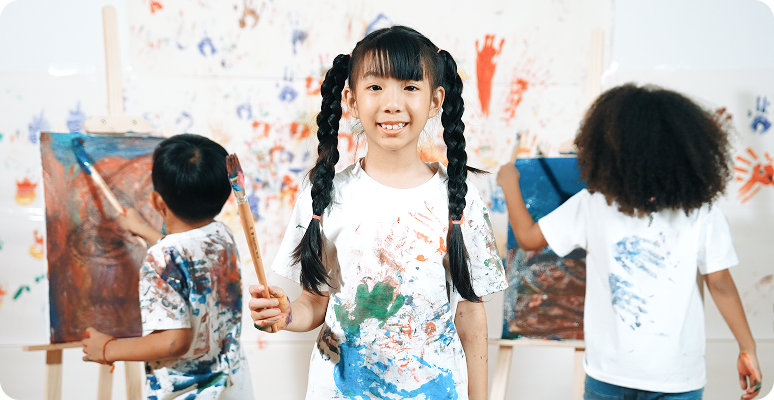
Art education goes beyond just creating. It is a profound avenue for students to express their emotions and manage feelings through constructive and healthy channels. In our art classes, students learn to interpret and give meaning to their own and others’ artworks, which enhances empathy and emotional intelligence.
Through the study of different art forms from around the world, students gain an appreciation and understanding of diverse cultures. This exposure is invaluable as it teaches tolerance and appreciation for differences, aligning with our school’s commitment to fostering a globally aware and inclusive community.
The skills learned in art classes are applicable to many life situations beyond school. These include but are not limited to problem-solving, teamwork, and fine motor skills. Artistic activities require students to plan, execute, and evaluate their work continuously, which mirrors the cycle of project management in professional and personal settings.
We continue to support and expand our art programs, recognizing the undeniable benefits that a robust arts education provides our students. By integrating arts deeply into our curriculum, we are preparing our students not just for school, but for life.